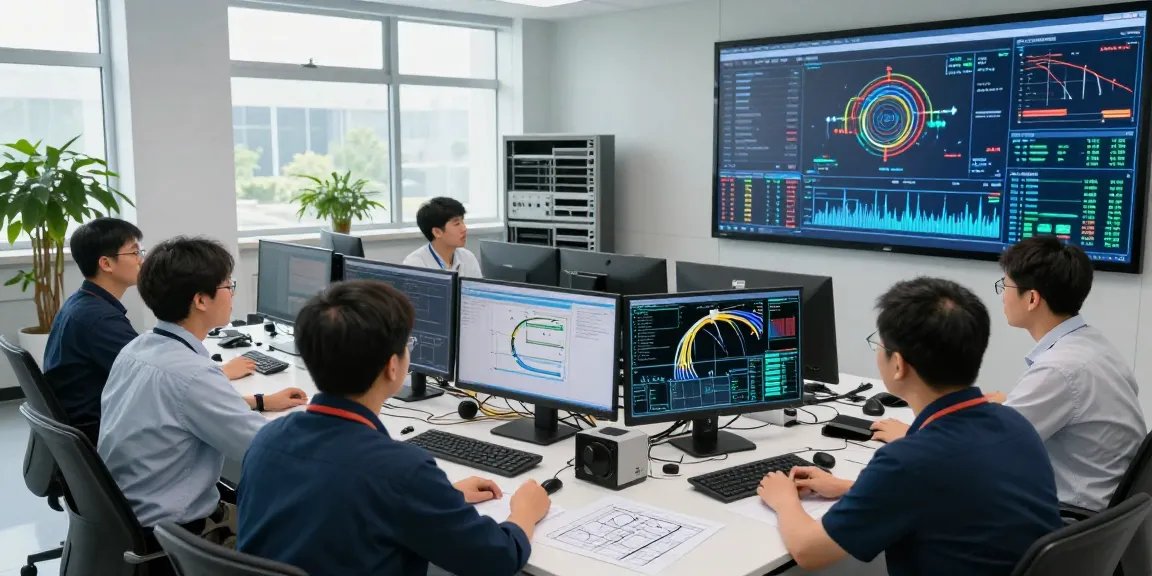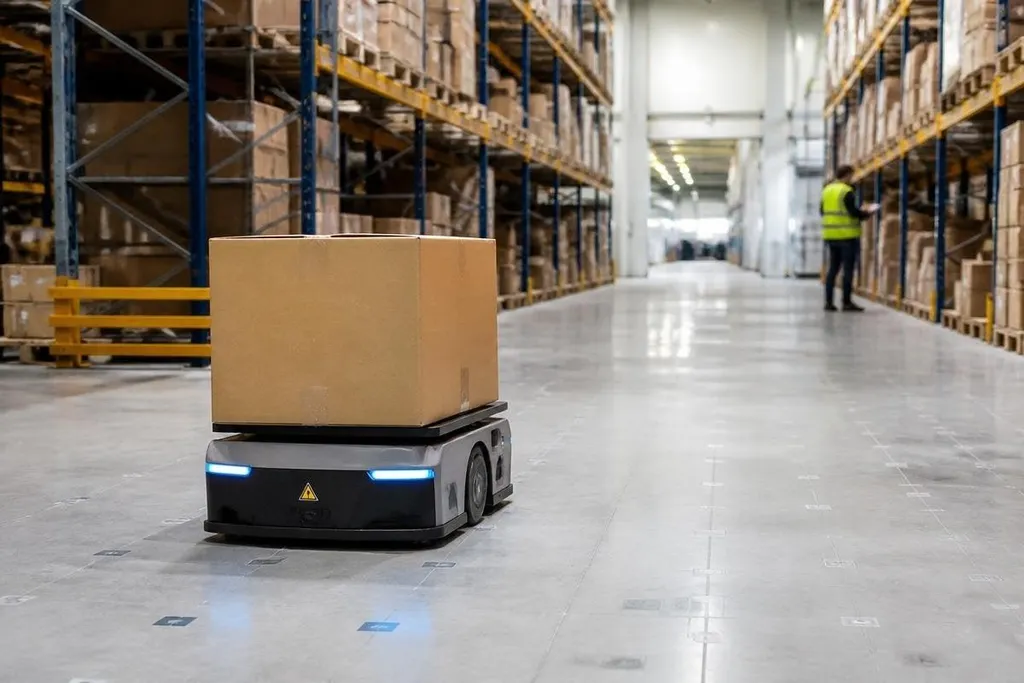
A warehouse robot rarely needs to choose its own destination from scratch. Software reads the warehouse map, checks current work, and assigns the next useful location while other robots and people keep moving.
For a warehouse manager, the practical question is simple: can the system reduce empty travel without creating new traffic or delays?
Quick read
- The software combines map data, open tasks, robot positions, and traffic rules.
- A route can change when an aisle closes, a shelf is empty, or another robot takes the same path.
- Better predictions still depend on clean warehouse data and clear operating rules.
What the system is predicting
The software usually handles several decisions at once. It may choose which robot should take a task, which route it should follow, and when that robot should leave its current position.
A task might involve moving a tote from storage to a packing station. The system checks the tote location, the destination, the robot's position, its battery state, and any work already waiting nearby.
It then scores possible assignments against the rules set by the warehouse operator. That score is not a human-style guess. It comes from data and a set of instructions.
The operator may give priority to short travel, urgent orders, low battery levels, or work that has waited longest. The result changes as the warehouse changes. A route that looks good at one moment can become a poor choice after another robot enters the same aisle.
How the route changes
Most systems start with a digital map of the building. The map marks driveable paths, storage areas, charging points, work stations, restricted zones, and places where robots must slow down or stop.
Sensors and warehouse software update that map with current conditions. A robot can report a blocked path. A warehouse system can report that a task has been completed or that a new order has arrived. The route planner then checks the next move instead of following a fixed list of turns.
This process is often called dynamic routing when the path changes during work. The robot may keep its destination while changing the road it takes to reach it.
The software also needs to prevent conflicts. It can reserve part of an aisle for a short period, assign travel priorities, or send one robot to a waiting area. These rules matter because the shortest route for one robot can slow down the whole fleet.
A route planner earns its place when it keeps aisles moving under load. Reports from Robot24 can put a warehouse robot’s task, fleet size, and test result beside claims about fewer delays. The next question is where AI prediction adds value beyond fixed route rules.
Where AI adds value
A basic route planner follows set rules. An AI model can use past task data to estimate where work will build up, how long a trip may take, or which parts of the warehouse often cause delays.
That estimate can help the system place robots closer to likely work. It can also group nearby tasks so one robot carries out several jobs before returning to a charging point or a waiting area.
The software still needs limits. A prediction can be wrong when order patterns change, a sensor fails, or a storage location in the database does not match the physical shelf. The system needs a safe fallback, such as stopping the robot or sending it to a known waiting point.
AI also cannot fix a poor warehouse layout by itself. If aisles are too narrow, charging points are badly placed, or task data is late, better software will have less room to help.
What to check before buying
Use these questions when a vendor shows a route-planning system:
- Data source: Which warehouse systems send task, shelf, and order data to the planner?
- Map updates: How does the system record blocked paths, moved shelves, and new work areas?
- Fleet rules: Can you set priorities for battery level, urgent orders, people, or restricted zones?
- Failure mode: What does a robot do when its map, sensor, or network connection stops matching reality?
- Proof: Can the vendor show an unedited run with normal traffic, missed tasks, and route changes?
I'd reject any route-planning claim that shows only an empty warehouse and gives no failure case.
The useful measure is not how clever the prediction sounds. Check how often robots reach the right station, how much empty travel they make, and how quickly the system recovers when the warehouse stops matching its map.